

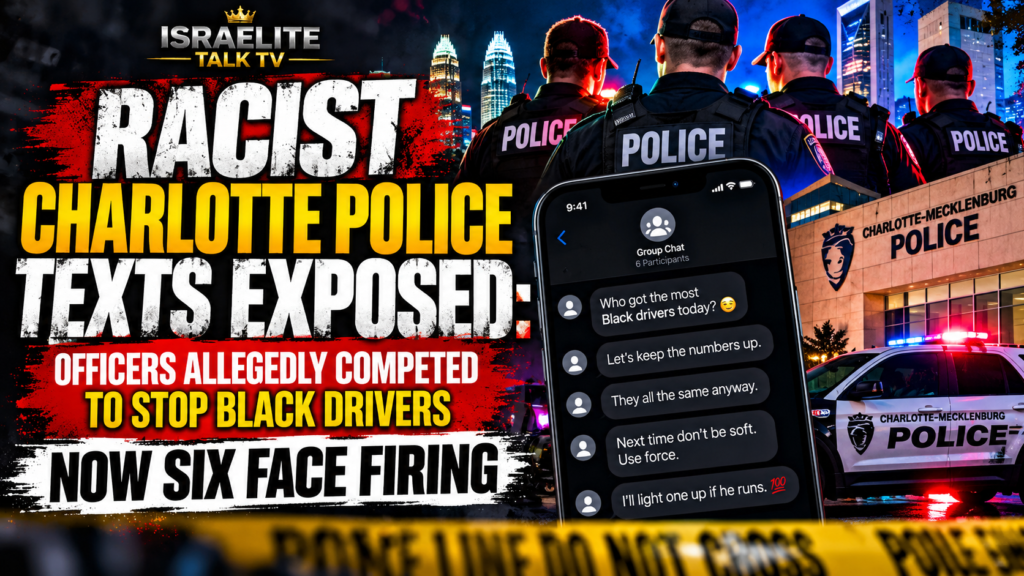
Six Charlotte-Mecklenburg police officers reportedly face termination after investigators uncovered racist group messages describing a competition to stop Black motorists. The messages also allegedly referenced excessive force and gunfire toward Black residents, raising serious questions about racial profiling and police accountability.
A disturbing scandal is unfolding inside the Charlotte-Mecklenburg Police Department (CMPD). Investigators reportedly discovered racist group messages in which officers allegedly competed to see who could pull over the most Black drivers.
According to an October 12 investigation by WBTV, the conversations included racial slurs and disturbing references to excessive force and firing weapons toward Black residents. By October 13, local news outlets reported that six officers faced possible termination.
However, the most surprising detail is how investigators uncovered the messages. They reportedly discovered the conversations while investigating an entirely different case.
How Investigators Uncovered the Racist Messages
The investigation began with former CMPD officer Seth Elliott, who faced allegations of improperly accessing a government computer. In July, North Carolina State Bureau of Investigation agents arrested Elliott on a misdemeanor charge involving unauthorized computer access.
According to CMPD’s official announcement, investigators suspected Elliott had misused law-enforcement databases. During that investigation, authorities reportedly examined his cellphone and uncovered the separate group conversation.
WBTV reported that officers from multiple police divisions allegedly exchanged racist messages. Elliott’s attorney confirmed his resignation but declined to discuss the messages. His separate criminal charge does not establish that he committed the conduct described in the group chat.
Six Officers Face Firing — But Were Black Motorists Actually Targeted?
According to WSOC-TV, six CMPD patrol officers received notices recommending termination. However, the department has not publicly confirmed that all six officers have been formally fired.
CMPD stated that it would not tolerate conduct that undermines public trust. The department has not independently confirmed every allegation detailed in the news reports.
The biggest unanswered question goes beyond the messages themselves: Did officers actually target Black motorists during traffic stops, or did the alleged competition remain inside the group chat?
Currently, no publicly verified evidence establishes that the reported messages resulted in unlawful stops, assaults or shootings. Nevertheless, the allegations raise legitimate questions about the officers’ previous traffic stops, arrests and use-of-force records. Those records could help investigators determine whether the officers’ alleged attitudes affected their conduct on duty. An independent review could also establish whether previous complaints raised concerns that supervisors failed to address.
The disciplinary process remains unresolved, and authorities have not established that the reported messages resulted in unlawful stops or violence. Still, the allegations raise serious questions about police accountability and public trust.
Israelite Talk TV wants to know: Should authorities independently review the traffic stops, arrests and use-of-force records of every officer implicated in the racist messages?
Sources
- WBTV — Racist Texts From Officers Lead to Internal CMPD Investigation (October 12, 2026)
Read the original investigation - WSOC-TV — Six CMPD Officers Face Termination Over Racist Messages (October 12, 2026)
Read the disciplinary report - WFAE — Six CMPD Officers Cited for Termination (October 13, 2026)
Read the latest local news coverage - Charlotte-Mecklenburg Police Department — Official Announcement of Seth Elliott’s Arrest (July 29, 2026)
Read the official CMPD statement
Editorial Note: Allegations regarding racist messages and a competition to stop Black drivers come from attributed local news reporting. These allegations do not establish that officers carried out unlawful stops, excessive force, or other criminal acts. The officers’ final disciplinary outcomes remain subject to confirmation.