

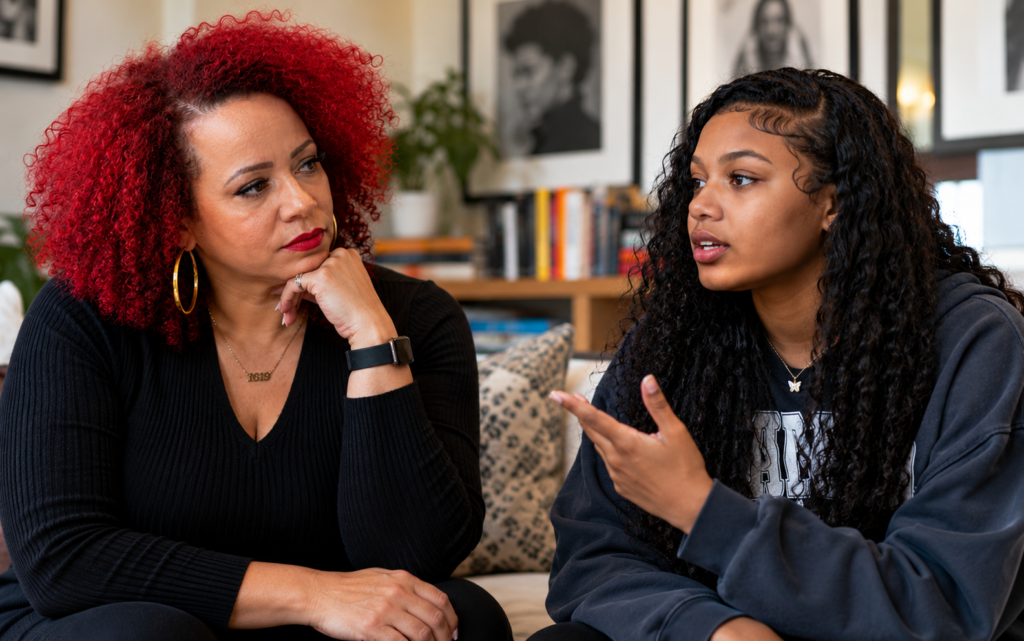
What happens when a parent’s principles collide with a child’s education?
Nearly a decade ago, Pulitzer Prize-winning journalist Nikole Hannah-Jones publicly explained why she chose to send her daughter, Najya, to a predominantly Black, high-poverty public school in Brooklyn.
For Hannah-Jones, the decision was about more than finding a school. Her work had documented racial segregation in American education, and she believed families could not criticize a segregated system while making choices that helped preserve it.
But now her daughter is telling the story from the other side.
In a recent This American Life conversation, 16-year-old Najya described entering high school feeling academically behind. She questioned why she had to bear the consequences of a decision connected to her mother’s larger beliefs about integration and public education.
The conversation puts Hannah-Jones in an uncomfortable position: defending the principles behind her decision while also listening to her daughter describe what she believes that decision cost her.
Najya later chose a more selective high school and received tutoring and additional academic support as she worked to close those gaps.
Their disagreement raises a question much larger than one family:
How much should children be asked to sacrifice for the principles their parents believe in?
For Black families, that conversation can become especially complicated. Parents may be weighing community, representation and commitment to public institutions against academic resources, opportunity and what they believe will give their children the strongest future.
Hannah-Jones and her daughter don’t offer a simple answer.
But their conversation exposes a tension many parents understand: standing on principle can be admirable—but what happens when your child believes she paid the price?
Sources: This American Life · Chalkbeat